

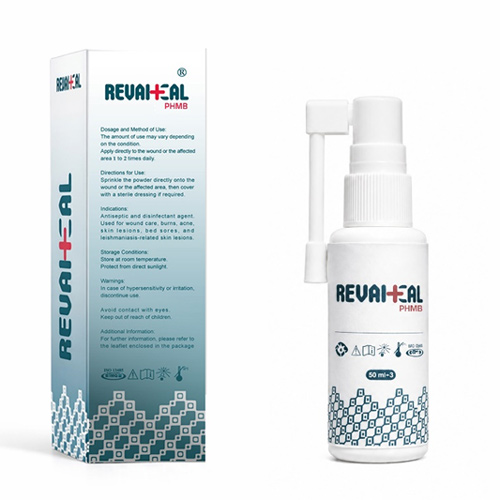
What Is Revaheal PHMB Spray?
Revaheal PHMB Spray is a specialized solution for wound cleansing and care. Its active ingredient is Polyhexamethylene Biguanide (PHMB), an antimicrobial compound used in some specialized wound care products due to its activity against a broad range of microorganisms and its favorable tissue compatibility.
Revaheal PHMB can be used for the cleansing and care of various superficial and chronic wounds, including certain diabetic wounds and pressure ulcers. Using an appropriate wound cleansing solution can help remove contaminants and exudate from the wound surface and provide more suitable conditions for continued wound care and dressing.
One of the key features of this product is its spray format, which allows for easy application while minimizing direct contact with the wound surface. Revaheal PHMB Solution is colorless and free from an unpleasant odor and, when used correctly, can be a practical option for repeated wound care.
The choice of an appropriate solution for wound cleansing and care should be based on the type of wound, level of contamination, presence of infection, wound depth, and the patient’s overall condition. In deep or infected wounds, diabetic foot ulcers, and pressure ulcers, the use of an antimicrobial solution does not replace professional wound assessment and treatment.
Features of Revaheal PHMB Spray
- Contains PHMB: The active ingredient of this product is Polyhexamethylene Biguanide (PHMB), which is used in wound care products for its antimicrobial properties.
- Suitable for wound care: It can be used as part of a wound care regimen for certain superficial and chronic wounds, based on the advice of a physician or wound care specialist.
- Colorless: The solution is colorless and does not alter the appearance of the skin or wound like some colored solutions.
- Easy-to-use spray format: The spray design allows the solution to be applied directly and easily to the intended area.
- Suitable for wound cleansing: It can help cleanse the wound surface of contaminants and exudate and prepare the wound bed for continued care and dressing.
- Suitable for repeated wound care: PHMB is used in some wound care products for repeated applications due to its favorable tissue compatibility.
- Can be used with appropriate wound dressings: After cleansing the wound, an appropriate dressing can be selected and applied according to the wound’s condition.
PHMB and Wound Care
PHMB, or Polyhexamethylene Biguanide, is a polymeric compound with antimicrobial properties that is used in certain healthcare and medical products, including wound care products. It can inhibit the activity of certain microorganisms by disrupting the structure of their cell membranes.
One of the important aspects of wound care is controlling the microbial burden and preventing conditions that may interfere with the wound healing process. For this reason, appropriate antimicrobial solutions may be used as part of a wound care regimen in certain situations.
However, PHMB should not be considered a standalone treatment for all wound infections. If a wound has an active infection, treatment should be based on clinical assessment and diagnosis by a physician or wound care specialist, and additional therapeutic measures may be required.
What Types of Wounds Is Revaheal PHMB Solution Suitable For?
Revaheal PHMB Solution can be used as part of the cleansing and care regimen for certain types of wounds. The type of wound and the patient’s condition determine whether this solution is appropriate for use.
- Superficial wounds and abrasions: For cleansing and initial care of superficial skin injuries.
- Superficial cuts: It may be used as part of the cleansing process when appropriate for the wound condition.
- Certain superficial burns: For the cleansing and care of certain superficial burns, according to medical advice or the product instructions.
- Chronic wounds: It may be used in certain wound care regimens for chronic wounds such as diabetic wounds and pressure ulcers, depending on the wound condition and the advice of a specialist.
- Wounds with exudate or contamination: It can be used to cleanse the wound surface and prepare it for continued wound care and dressing.
Important: In deep or infected wounds, or wounds with an unpleasant odor, purulent discharge, spreading redness, severe pain, or signs of infection spreading, using PHMB spray alone is not sufficient. The patient should be evaluated by a physician or wound care specialist.
How to Use Revaheal PHMB Spray
Revaheal PHMB Solution should be used according to the instructions provided on the product packaging and the recommendations of a physician or wound care specialist. In general, the application process is as follows:
1. Wash your hands: Before starting the dressing procedure, wash your hands thoroughly and prepare the necessary wound care supplies.
2. Prepare the wound: If there is an existing dressing, carefully remove it. If the dressing is stuck to the wound, avoid removing it forcefully.
3. Apply the solution: Spray Revaheal PHMB onto the wound surface according to the product instructions, ensuring that the intended area is adequately covered with the solution.
4. Cleanse the wound: Allow the solution to remain on the wound surface according to the product instructions. If necessary, remove loosened exudate and contaminants using appropriate sterile gauze.
5. Continue wound care: After cleansing, apply an appropriate wound dressing based on the type and condition of the wound.
Important: The frequency of use and contact time should be determined according to the product instructions and the condition of the wound. A single application schedule cannot be recommended for all types of wounds.
Revaheal PHMB vs. Revaheal Sept
Both products are designed for wound care, but their formulations and characteristics are different. Revaheal PHMB is based on Polyhexamethylene Biguanide (PHMB), with its primary focus on wound cleansing and microbial load control as part of the wound care process.
In contrast, Revaheal Sept Spray is formulated with ingredients such as chitosan and silver nanoparticles and, in addition to its antimicrobial properties, is designed to support wound care and the healing process.
Therefore, the choice between Revaheal PHMB and Revaheal Sept should be based on the type of wound, wound bed condition, amount of exudate, and the specific goal of wound care. For chronic and complex wounds, product selection should preferably be made with the guidance of a physician or wound care specialist.
Revaheal PHMB or Betadine?
Betadine, or povidone-iodine, is a well-known antiseptic solution used in various medical settings. However, when caring for chronic wounds, the choice of an appropriate solution should be based on the wound condition and the intended purpose of use.
One important difference between PHMB and iodine-based solutions is their mechanism of action and chemical characteristics. PHMB is a polymeric antimicrobial compound used in specialized wound care products due to its favorable tissue compatibility, while povidone-iodine is an iodine-based compound with a different mechanism of action.
Therefore, it cannot be stated that one solution is always better than the other for every type of wound. In chronic wounds, diabetic wounds, or pressure ulcers, the choice of a cleansing or antimicrobial solution should be based on the wound bed condition and the patient’s overall treatment plan. When the goal is to use a PHMB-based solution for wound care, Revaheal PHMB can be considered as one possible option.
Contraindications and Important Precautions
- Do not use the product if you have a known allergy to PHMB or any of its ingredients.
- Avoid direct contact of the solution with the eyes.
- If an unusual skin reaction occurs, discontinue use and consult a physician.
- During pregnancy and breastfeeding, consult a physician or healthcare professional before use.
- For deep or infected wounds or wounds showing signs of spreading infection, the use of this solution does not replace professional medical treatment.
- Read the instructions provided on the product packaging before use.
Frequently Asked Questions About Revaheal PHMB Spray
What is the active ingredient in Revaheal PHMB Spray?
The active ingredient is Polyhexamethylene Biguanide, or PHMB, which is used in wound care products for its antimicrobial properties.
Can Revaheal PHMB Spray be used on open wounds?
This product is designed for wound cleansing and care. However, its suitability for a specific wound depends on the type, depth, level of contamination, and overall condition of the wound. For complex wounds, use should preferably be guided by a physician or wound care specialist.
Is Revaheal PHMB suitable for diabetic wounds?
PHMB may be used as part of the care regimen for certain chronic wounds, including diabetic wounds. However, diabetic foot wounds require professional assessment, and using an antimicrobial solution alone is not considered a complete treatment for a diabetic wound.
Is Revaheal PHMB suitable for pressure ulcers?
In certain cases, PHMB-containing solutions may be used as part of the cleansing and care process for pressure ulcers. The choice of solution should be based on the stage of the wound, amount of exudate, presence of infection, and wound bed condition.
Does Revaheal PHMB cause a burning sensation?
One of the characteristics of PHMB in wound care products is favorable tissue tolerance. However, individual sensations may vary depending on the wound condition and individual sensitivity. If severe burning or an unusual reaction occurs, discontinue use and consult a physician.
What is the difference between Revaheal PHMB and Revaheal Sept?
Revaheal PHMB is based on Polyhexamethylene Biguanide and is used for antimicrobial wound cleansing and care. Revaheal Sept has a different formulation and, in addition to its antimicrobial properties, is designed to support wound care and the healing process. The appropriate product should be selected based on the condition of the wound.
Can Revaheal PHMB be used during pregnancy and breastfeeding?
During pregnancy and breastfeeding, it is recommended to consult a physician or healthcare professional before using antimicrobial wound care products.